Geoff was initially diagnosed with Parkinson’s and Lewy Body Dementia in 2016, and over time Pat’s caring role increased. Today he needs 24/7 support with all aspects of his life, from feeding to personal care and administering medication.
Having a lasting power of attorney was especially important when Geoff was taken to hospital after breaking his hip in 2021. “He was unable to advocate for himself”, said Pat. “He became delusional after anaesthetic and as his hospital care was appalling, I needed full authority to speak for him.”
Whilst Geoff did retain capacity at that time, and was able to sign the documents, the process wasn’t straightforward. Pat said: “I had made a previous attempt, but I got muddled with the order in which forms were to be signed. It was also tricky to get to see the attorneys and get forms witnessed. I did wish I had done it sooner.”
When it comes to a lasting power of attorney (the legal term for a power of attorney in England and Wales), there are two main types – health and welfare, and property and financial affairs. Pat and her daughter have now obtained both, giving them the legal authority to make decisions on Geoff’s behalf.
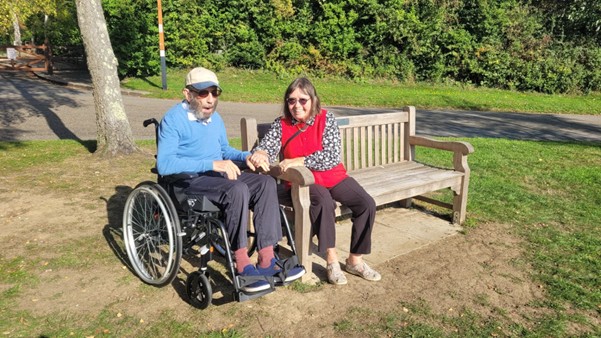
It gives me confidence and authority to deal with everything assertively,” Pat said.
“My husband is relieved that he no longer has to take responsibility for any admin or finance tasks.”
“I am aware of a friend, a wife of over 50 years, being excluded from discussions regarding her husband’s care in hospital as he lost capacity. He was placed under a Deprivation of Liberty (DoL) Order, and she was excluded from case conferences discussing his care. She wasn’t allowed to arrange his ongoing care or choose a care home.
“I could have been faced with similar problems. I could not have discharged him from hospital in his best interests without the confidence of the power of attorney and he would have suffered poor care for even longer.
“Most people think if you’re the next of kin you’ll have some legal rights, but you don’t. You assume the person closest to you will be automatically involved and they’re not. Hospitals ask if you’re the next of kin when you visit, and that can be confusing. What they really should be asking is ‘Do you have power of attorney?’